Memory Game
MINNESOTA MARINE ART MUSEUM
Card Details
Scroll down to learn more about each Game Card and the artist.
Main Menu
Beginner - American
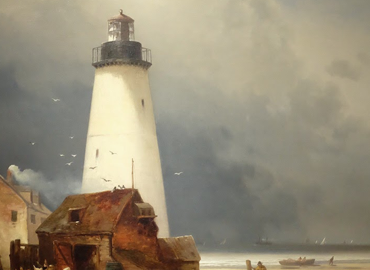
Edward Moran,
Sandy Hook Lighthouse, 1876.
Oil on canvas.
This is a painting of the oldest original lighthouse in the USA designed and built in 1764.
Edward Moran,
Sandy Hook Lighthouse, 1876.
Oil on canvas.
This is a painting of the oldest original lighthouse in the USA designed and built in 1764.
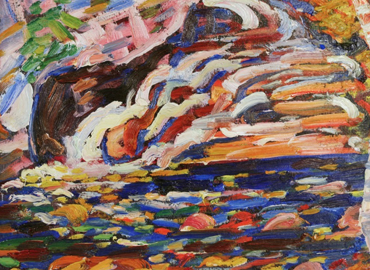
Marsden Hartley,
Autumn Cascade, 1908.
Oil on board.
Hartley used color and gesture in this depiction of a waterfall.
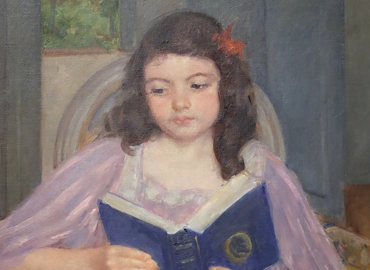
Mary Cassatt,
Françoise in a Round-Backed Chair, Reading, 1909.
Oil on canvas.
The little girl in this painting posing for a portrait was Cassatt's friend's child, Francoise.
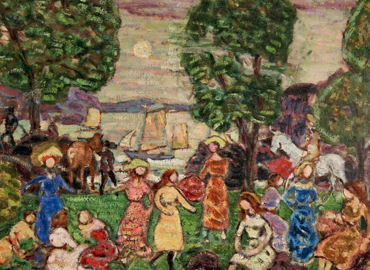
Maurice Prendergast,
Twilight (Crepuscule), c. 1918-23.
Oil on canvas.
This scene of a party shows figures with hats, pets, and stylish clothes, but Prendergast did not paint facial features on his stylized figures.
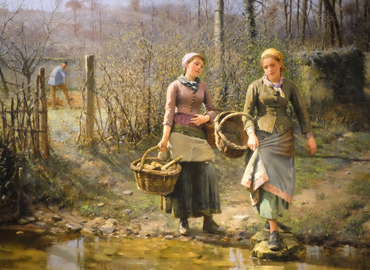
Daniel Ridgway Knight,
The Brook, 1894.
Oil on canvas.
Ridgway Knight liked to paint the pleasant side of being a French peasant, or farm laborer, like being outside in nature, but in reality it was a hard job.
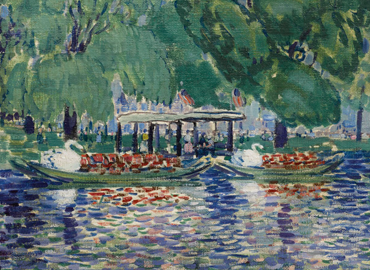
George Luks,
The Swan Boats, 1904.
Oil on canvas.
This scene depicts swan boats on the pond at the Boston Public Gardens.
Beginner - European
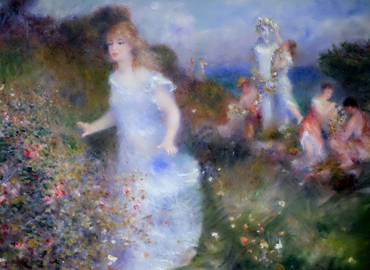
Pierre-August Renoir,
La Fête de Pan or The Festival of Pan, 1879.
Oil on canvas.
The children in this painting are celebrating springtime by decorating a statue of the Greek god, Pan, with fresh flowers.
Pierre-August Renoir,
La Fête de Pan or The Festival of Pan, 1879.
Oil on canvas.
The children in this painting are celebrating springtime by decorating a statue of the Greek god, Pan, with fresh flowers.
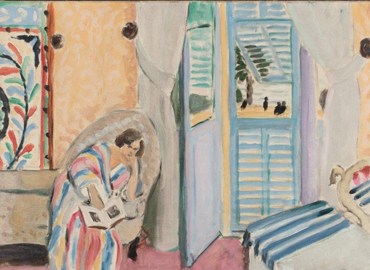
Henri Matisse,
Interiéur à Nice, Femme Assise avec un Livre or Interior in Nice, Woman Sitting with a Book, 1919.
Oil on canvas.
Matisse loved to paint with bright colors and bold patterns, as seen here in this scene depicting a woman reading a book in her hotel room overlooking the beach.
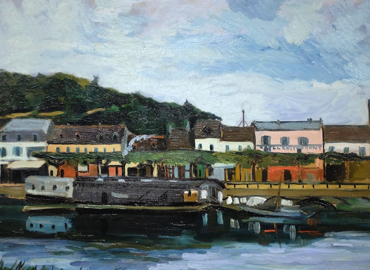
Maurice de Vlaminck,
Les Bords de la Seine à Bougival or Banks of the Seine at Bougival, 1904.
Oil on canvas.
This restful river scene in France shows his developing Fauvist style of painting through the single-color shapes he uses as structures on the hillside.
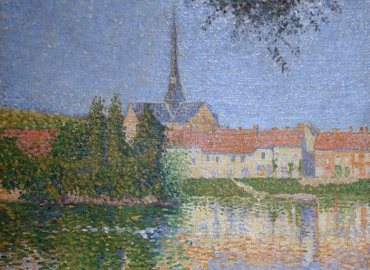
Paul Signac,
Les Andelys. L'île à Lucas or Les Andelys, Lucas Island, 1886.
Oil on canvas.
Signac painted this artwork using dots and dabs of color, instead of blending them together. This is a technique called "Pointilism."
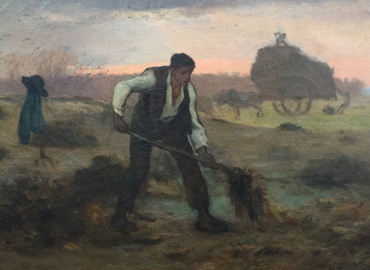
Jean-Françoise Millet,
Paysan Répandant du Fumier or Peasant Spreading Manure, 1851.
Oil on canvas.
Millet was known for painting the often unpleasant tasks of farmers and peasants of the French countryside.
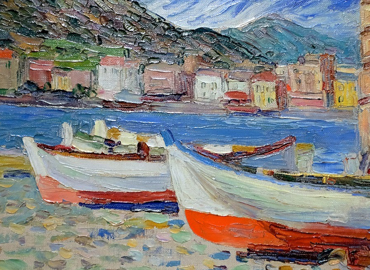
Wassily Kandinsky,
Rapallo, Boote or Rapollo, Boats, 1905.
Oil on canvas board.
These colorful boats on the beach in Rapallo, Italy were a favorite subject matter of Kandinsky while he lived there for six months.
Advanced - American
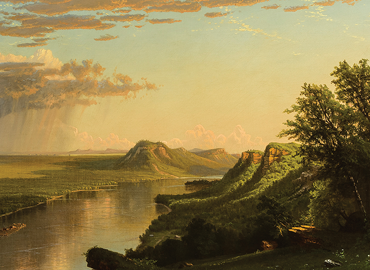
Alfred Thompson Bricher,
On the Mississippi River near Winona, Minnesota - Shower Clearing, 1868.
Oil on canvas.
The view this painting depcits is from Homer, Minnesota looking downriver to Perrot State Park.
Alfred Thompson Bricher,
On the Mississippi River near Winona, Minnesota - Shower Clearing, 1868.
Oil on canvas.
The view this painting depcits is from Homer, Minnesota looking downriver to Perrot State Park.
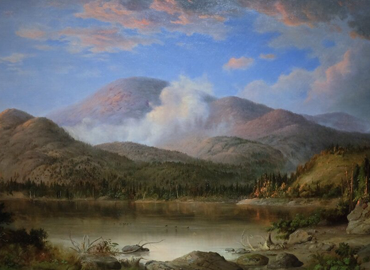
Robert Duncanson,
Mount Orford, 1864.
Oil on canvas.
African American artist, Robert Duncanson, painted this scene of Mount Orford in Canada while he was in self-imposed exile during the Civil War.
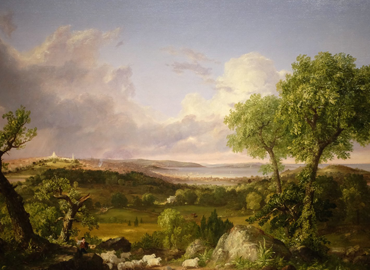
Thomas Cole,
View of Boston, 1837-39.
Oil on canvas.
Thomas Cole painted this view of Boston for an American expatriate living in London and missing Boston.
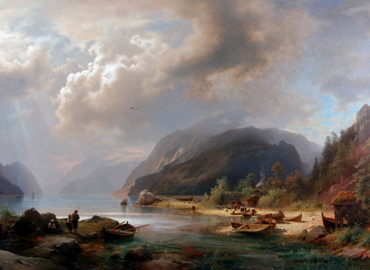
Hermann Herzog,
Alpine Lake Scene, 1868.
Oil on canvas.
Herzog highlights the sky in this painting by playing with atmospheric effects like light, haze, and shadow.
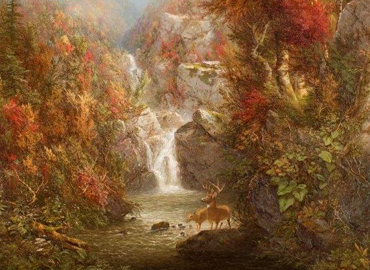
William Mason Brown,
View on the Deer River, c. 1860.
Oil on canvas.
Hudson River School painters, like Brown, often included deer in their composition to symbolize the innocence of the land before the arrival of man.
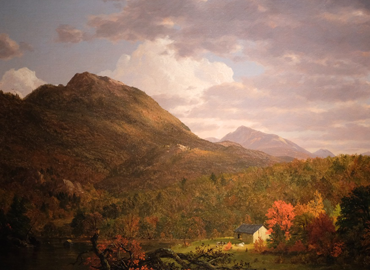
Frederic Edwin Church,
Autumn, 1853.
Oil on canvas.
Hudson River School painters, like Church, often painted scenes like this one highlighting the idea of making a home in the wilderness to live in harmony with nature.
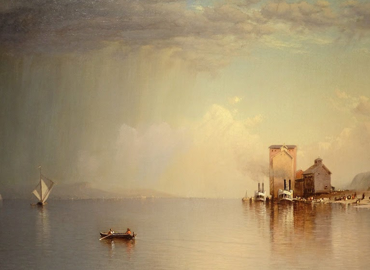
Alfred Thompson Bricher,
Mississippi River (Dubuque, Iowa), 1870.
Oil on canvas.
Bricher made this painting after he traveled west from his home in New York to Iowa to go on a sketching trip.
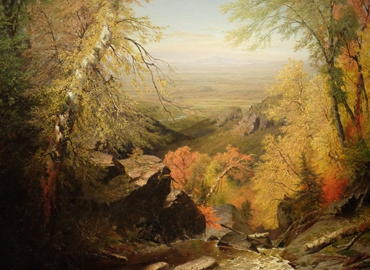
Richard William Hubbard,
Stream in the Mountains, 1867.
Oil on canvas.
This mountain stream is a view from the top of Kaaterskill Falls — the highest cascading waterfall in New York state.
Advanced - European
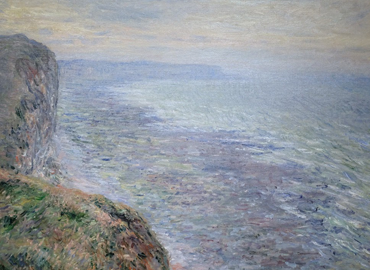
Claude Monet,
Près de Fécamp or Near Fécamp, 1881.
Oil on canvas.
Monet is perhaps the most famous of the French Impressionsists- painting outdoor scenes concentrating on light.
Claude Monet,
Près de Fécamp or Near Fécamp, 1881.
Oil on canvas.
Monet is perhaps the most famous of the French Impressionsists- painting outdoor scenes concentrating on light.
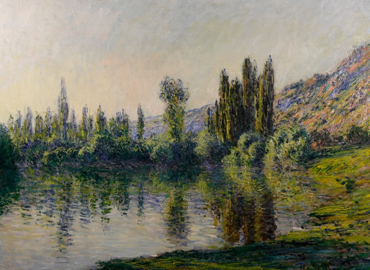
Claude Monet,
La Seine à Vétheuil or The River Seine at Vétheuil, 1881.
Oil on canvas.
Monet used visible brushtrokes- dabs of color, instead of well-blended colors, as part of his Impressionist style.
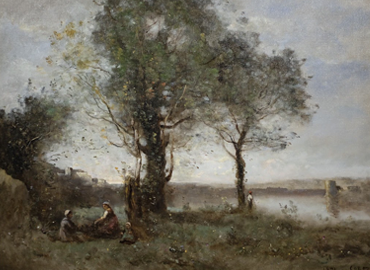
Jean-Baptiste-Camille Corot,
Brûme Matinale au Marais or Morning Haze on the Marsh, 1871.
Oil on canvas.
This is a Corot from late in his career when he focused on atmosphere and a soft application of paint.
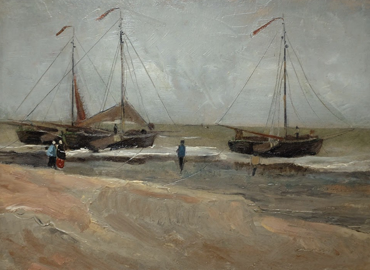
Vincent Van Gogh,
The Beach of Scheveningen, 1882.
Oil on paper on panel.
This is considered to be Van Gogh's very first oil painting!
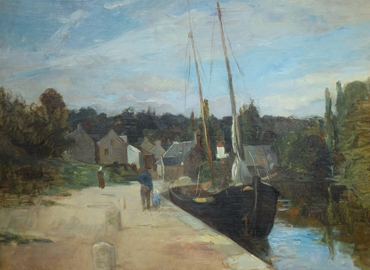
Berthe Morisot,
Rosbras (Finistère, Normandy), 1866 or 1867.
Oil on canvas.
This painting was shown at the very famous Paris Salon in 1868- a unique accompolishment for a female artist at this time.
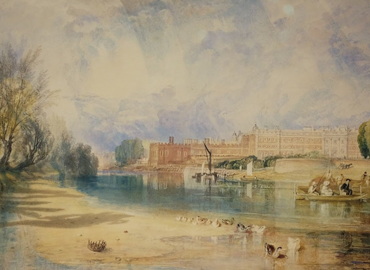
Joseph M.W. Turner,
Hampton Court Palace, 1825-28.
Watercolor on paper.
This watercolor by Turner pokes fun at the pomp and circumstance of the British royalty by including a decaying basket formed like a crown, and a procession of ducks.
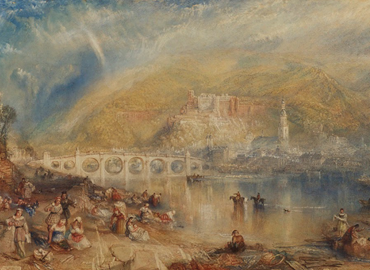
Joseph M.W. Turner,
Heidelberg with a Rainbow, 1841.
Watercolor on paper.
Turner is sometimes called the "father of the French Impressionists" even though he painted years before they came into fashion because of his loseness and hazy aesthetic with an emphasis on light.
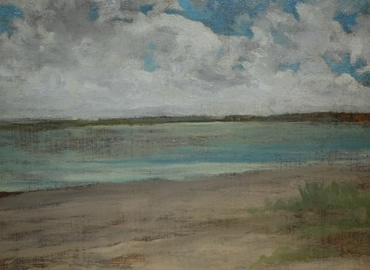
James McNeil Whistler,
Howth Head, Near Dublin, 1900.
Oil on panel.
Whistler divides the sky, water, and beach into stark horizontal bands which gives this small landscape a modern feel.
DETAILED IMAGES
These artworks have been cropped to fit the game card ratio. Please note that these are details from the original size.